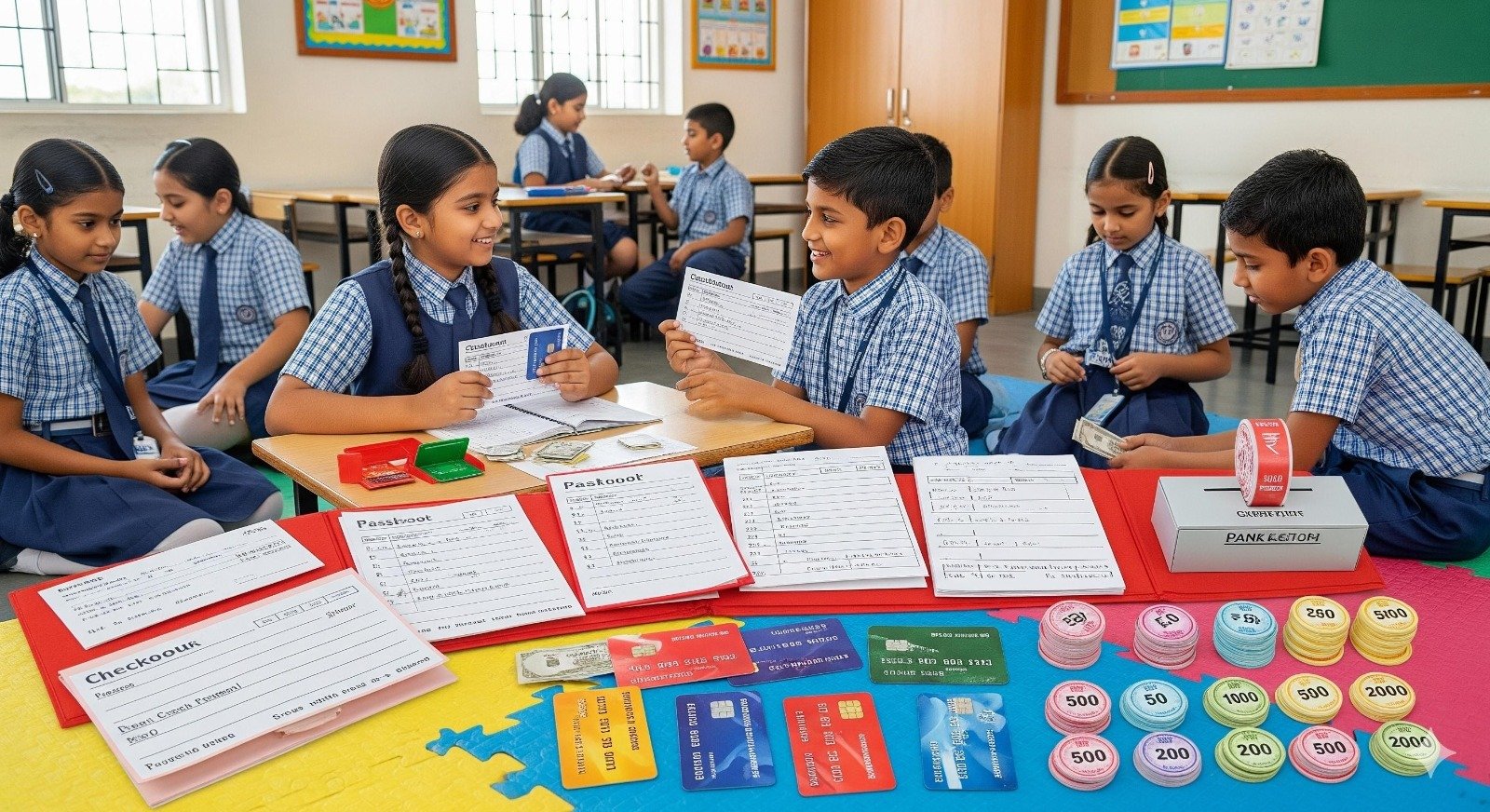
Education should prepare students not only for examinations but also for the responsibilities of everyday life. Financial literacy is one of the skills that can make a meaningful difference in their future. When children learn to save, prepare budgets, spend carefully and recognise financial risk
Most students spend years learning mathematics, science, languages and social studies. They prepare for examinations, complete assignments and work towards building successful careers. However, one important life skill often receives less attention: knowing how to manage money.
A student may understand complicated mathematical formulas but still struggle to prepare a monthly budget, understand bank interest or recognise a suspicious online payment request.
Financial literacy is not just about earning money. It is about understanding how money works, making sensible decisions and developing responsible financial habits.
The importance of this subject is receiving greater attention in India. In October 2026, reports highlighted the introduction of personal finance topics such as budgeting, saving, investing, insurance, borrowing and income tax in a new Class 9 NCERT Social Science chapter. This reflects the growing recognition that financial knowledge belongs in students' education.
What Is Financial Literacy?
Financial literacy means having the knowledge and confidence to make informed decisions about money.
It includes understanding basic financial activities such as:
Saving money for future needs.
Preparing a personal budget.
Understanding bank accounts and digital payments.
Learning how interest works.
Identifying unnecessary expenses.
Recognising online financial scams.
Understanding the basics of loans and insurance.
These skills help children become more independent and financially responsible as they grow older.
Why Is Financial Education Important for Students?
Children begin making financial decisions much earlier than many parents realise. They receive pocket money, purchase stationery, spend on snacks and use digital payment services with their families.
Without proper guidance, they may develop poor spending habits or become vulnerable to online fraud.
Here are some important reasons why financial education deserves a place in school learning.
- It Develops Saving Habits
Saving is one of the simplest financial habits children can learn.
Parents can encourage children to save a small portion of their pocket money instead of spending everything immediately. A savings box or a simple savings chart can make this activity interesting.
The objective is not to save a large amount. It is to understand the value of setting money aside for future needs.
- It Teaches Students How to Prepare a Budget
A budget helps people understand how much money they receive and where they spend it.
Students can start with a simple monthly pocket-money budget. For example, they can divide their money between stationery, snacks, savings and other small expenses.
This activity teaches children to prioritise important needs instead of spending without planning.
- It Helps Children Understand the Difference Between Needs and Wants
Children often want new toys, gadgets, games and fashionable products. However, not every purchase is necessary.
Financial education teaches students to distinguish between needs and wants.
For example, buying a school notebook is generally a need, while purchasing an expensive accessory may be a want.
Understanding this difference helps children make thoughtful spending decisions.
- It Builds Awareness About Digital Payments
Digital payments have become a regular part of everyday life in India. Students may see their parents using UPI, debit cards, mobile banking and online shopping platforms.
They should understand that digital payments involve real money and must be handled carefully.
Students should learn basic safety practices, such as never sharing an OTP, PIN or password and checking payment details before approving a transaction.
- It Protects Students from Online Financial Scams
Online fraud is a growing concern for families. Fake prize messages, suspicious links, fraudulent payment requests and impersonation attempts can affect people of all ages.
Students should know that they must not share banking details or personal information with unknown people.
If they receive a suspicious message or payment request, they should discuss it with a trusted adult rather than responding immediately.
- It Introduces the Concept of Interest
Interest is an important financial concept that students will encounter when they use savings accounts, borrow money or learn about investments.
Teachers can explain it through simple examples.
For instance, if a person saves money in an account that offers interest, the bank may pay an additional amount according to the account's terms.
Learning this concept at an early age makes financial topics easier to understand later.
- It Encourages Responsible Spending
Responsible spending means thinking before making a purchase.
Students can learn to compare prices, check product quality and consider whether they really need something.
These small decisions can gradually develop better money management habits.
- It Prepares Students for Financial Independence
After completing school or college, many young people begin managing their own expenses.
They may need to pay for travel, accommodation, food, education and other necessities.
Students who understand budgeting and saving are better prepared to handle these responsibilities.
10 Practical Money Skills Every Student Should Learn
Financial education becomes more effective when students practise it instead of only reading about it.
Here are ten useful skills that parents and teachers can introduce through everyday activities.
Track daily expenses: Write down where pocket money is spent.
Set a savings goal: Save towards a book, school bag or another useful purchase.
Prepare a monthly budget: Divide available money into different spending categories.
Compare prices: Check different options before buying a product.
Understand bank accounts: Learn the basic purpose of savings accounts and deposits.
Learn about interest: Understand how interest works through simple examples.
Use digital payments safely: Never share PINs, passwords or OTPs.
Recognise financial fraud: Avoid unknown links and suspicious offers.
Understand borrowing: Learn why borrowed money must be repaid according to agreed terms.
Plan for future expenses: Understand why saving regularly can help meet important goals.
How Can Parents Teach Financial Literacy at Home?
Parents do not need to be financial experts to teach children basic money management.
They can introduce simple activities that make learning practical and enjoyable.
Give Age-Appropriate Pocket Money
Giving children a small, manageable amount of pocket money can help them understand spending decisions.
Allow them to make simple choices while guiding them when they make mistakes.
Involve Children in Household Budgeting
Parents can explain the approximate cost of groceries, electricity bills, school supplies and other household expenses.
This helps children understand that money is earned through effort and needs to be managed carefully.
Encourage Saving for a Goal
Instead of purchasing every item immediately, encourage children to save towards something they genuinely want.
This develops patience and helps them understand the connection between saving and achieving goals.
Discuss Online Safety
Explain that a bank account, UPI application or payment card should never be treated like a game.
Children should understand that even a small payment requires attention and that suspicious financial activity must be reported to an adult.
How Can Schools Include Financial Literacy in Education?
Schools can introduce financial education through classroom discussions, practical assignments, group activities and real-life examples.
For example, teachers can ask students to prepare a budget for a school picnic, compare prices of everyday products or create a savings plan for a specific goal.
These activities connect classroom learning with everyday life.
The CBSE curriculum also provides skill-based subjects related to financial markets, banking and insurance at different school levels. Schools can use suitable learning resources to introduce financial concepts according to students' age and understanding.
At What Age Should Children Start Learning About Money?
Financial education can begin with simple ideas during primary school and gradually become more detailed as children grow.
Primary Classes: Children can learn about money, coins, notes, saving and basic spending decisions.
Middle School: Students can practise budgeting, price comparison, savings goals and responsible digital payment habits.
Secondary School: Students can learn about bank accounts, interest, inflation, borrowing, insurance and financial fraud.
Senior Secondary School: Students can explore taxation, financial planning, responsible investing and the basics of financial markets.
The aim should be to make learning age-appropriate and practical rather than overwhelming children with complicated financial terms.
Frequently Asked Questions
- What is financial literacy for students?
Financial literacy for students means understanding basic money management skills such as saving, budgeting, spending wisely and using banking services safely.
- Why should financial literacy be taught in schools?
It prepares students to make informed financial decisions, avoid unnecessary spending, understand digital payments and manage money responsibly in adulthood.
- How can parents teach children about money?
Parents can introduce pocket money, savings goals, household budgeting and simple shopping activities to teach children practical money management.
- What is the best age to start financial education?
Children can begin learning basic money concepts in primary school. More advanced topics can be introduced gradually as they grow older.
- What financial skills should teenagers learn?
Teenagers should understand budgeting, saving, bank accounts, interest, digital payment safety, borrowing, insurance and basic financial planning.
 Career Guidance
 Career Guidance
 Career Guidance