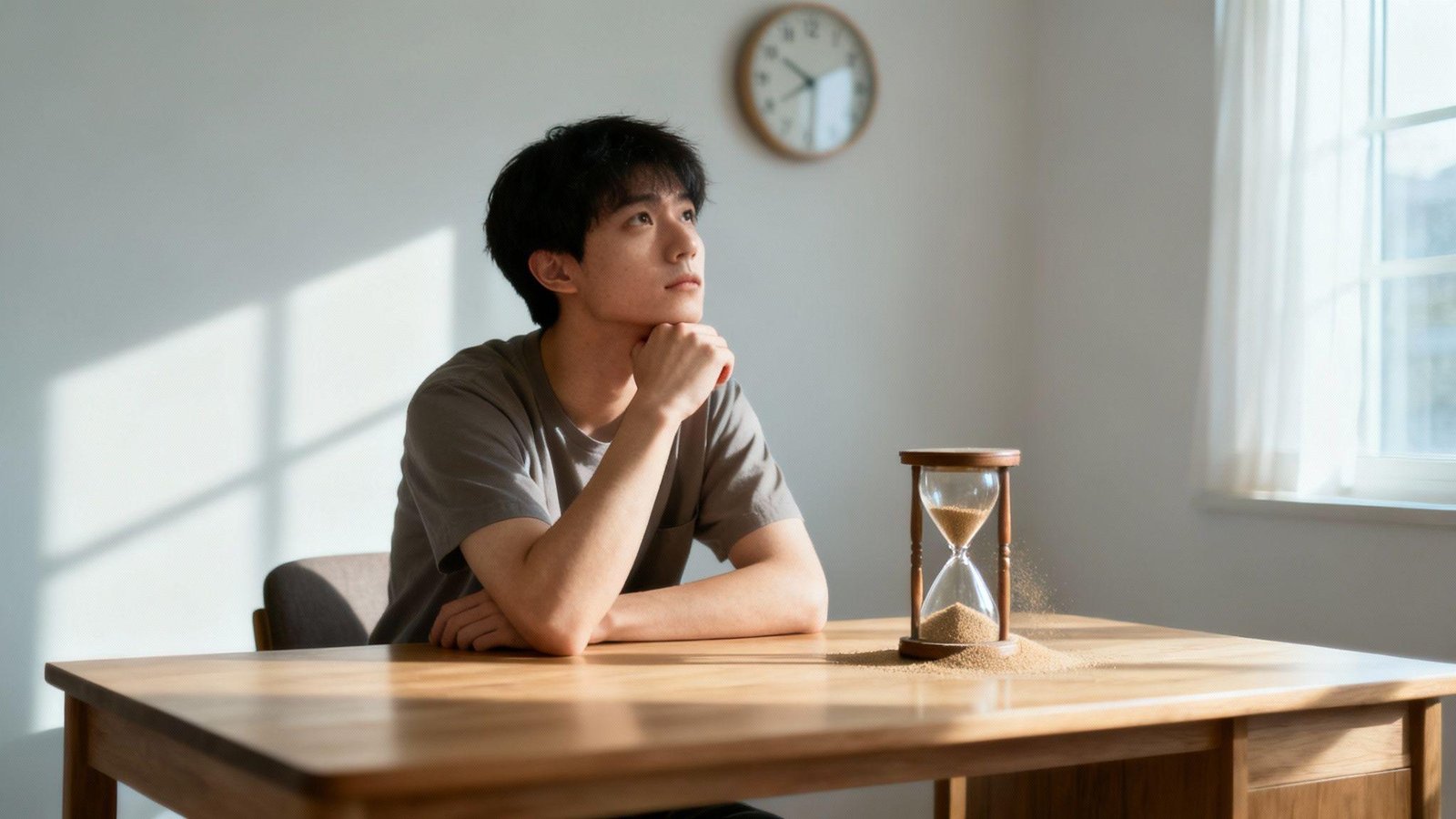
Remember when school holidays felt endless and birthdays seemed so far apart? As adults, months and even years can feel like they pass in the blink of an eye. This fascinating experience has connections to memory, attention and how our brains process everyday experiences.
Why Does Time Feel Faster as We Grow Older? The Science Behind This Strange Feeling
Think about your childhood for a moment.
A summer vacation seemed to last forever. Waiting for your birthday felt like an exciting countdown. Even a single school day could feel surprisingly long.
Now compare that with adult life. One moment it's January, and suddenly the year is almost over. Weeks pass quickly, weekends disappear and birthdays seem to arrive sooner than expected.
But here's the interesting question: Does time actually move faster as we grow older, or does our brain simply experience it differently?
The clock hasn't changed its speed. But our perception of time can change significantly.
Let's understand why.
- Every Year Becomes a Smaller Part of Your Life
One popular explanation is based on proportional time.
When you're 10 years old, one year represents 10% of your entire life.
When you're 50, that same year represents just 2% of your life.
This mathematical comparison is sometimes used to explain why each passing year may feel less significant as we grow older.
However, it is only one possible explanation, not a proven scientific law of how people experience time.
- Childhood Is Full of New Experiences
Think about how many things you experience for the first time as a child.
Your first day at school, your first bicycle, your first trip to another city and countless new discoveries.
New experiences create rich and detailed memories.
As adults, our routines often become more predictable. We may travel the same route, follow similar schedules and repeat familiar activities.
When days look similar, fewer experiences stand out in our memory.
As a result, looking back at a routine month can make it feel as though it passed very quickly.
- Your Brain Doesn't Measure Time Like a Clock
Your brain does not have one simple internal clock that perfectly tracks every passing second.
Instead, our experience of time is influenced by several processes, including:
- Attention
- Memory formation
- Emotional experiences
- Expectations
- Mental workload
For example, waiting for an important phone call can make five minutes feel extremely long.
But spending five hours doing something enjoyable can make the same amount of time feel surprisingly short.
The amount of time hasn't changed. Your attention has.
- Why Do Holidays Feel Longer Than Ordinary Days?
Have you noticed that a holiday often feels more memorable than a normal working week?
One reason may be the number of different experiences you collect.
A holiday might include visiting a new place, trying unfamiliar food, meeting people and exploring different surroundings.
These events create distinct memories.
A routine week, on the other hand, may contain very few memorable changes.
When you look back, the holiday can feel longer because you have more separate experiences to remember.
This is one reason psychologists distinguish between how long something feels while it is happening and how long it seems when remembered later.
- Stress and Busy Schedules Can Make Time Feel Like It's Disappearing
Modern life often involves multiple responsibilities at once.
Students manage classes, assignments and exams. Working professionals balance deadlines, meetings and personal commitments.
When your attention is constantly occupied, you may pay less attention to the passing moments.
Days can begin to feel repetitive, and suddenly another week has gone by.
Taking breaks, trying new activities and being more mindful of everyday experiences may help make life feel less like one continuous routine.
- Can You Make Time Feel Slower Again?
You cannot slow down the clock, but you can make your experiences more memorable.
Here are a few simple ways:
Try something new: Learn a musical instrument, visit a different place or explore a new hobby.
Break your routine: Change your walking route, try a different activity or spend time outdoors.
Be present: Avoid checking your phone constantly when spending time with friends and family.
Create memories: Take photographs, maintain a journal or record small moments from your day.
Learn continuously: Reading, exploring new subjects and developing skills can introduce variety into everyday life.
The goal isn't to make every minute feel longer. It's to make more moments worth remembering.
- An Interesting Thought: Your Memories Help Shape Your Sense of Time
Imagine two people experiencing the same 30-day period.
One person follows the same routine every day. The other travels, learns something new and meets different people.
When both look back at the month, their experiences may feel very different.
The second person may remember more distinct events, making that month feel fuller in retrospect.
This illustrates an important idea: our memories don't simply store the past; they influence how we experience it.
Final Thoughts
Time moves at the same measurable pace, whether you're 10, 25 or 70 years old. Yet our experience of it can change as our routines, memories and attention change.
Perhaps that's why childhood feels so long when we remember it. There were so many new things to discover.
So, the next time you feel that another month has disappeared too quickly, try doing something different. Explore a new place, learn something interesting or spend time creating memories.
You may not be able to slow down time, but you can make your days feel more meaningful.
 Career Guidance
 Career Guidance
 Career Guidance