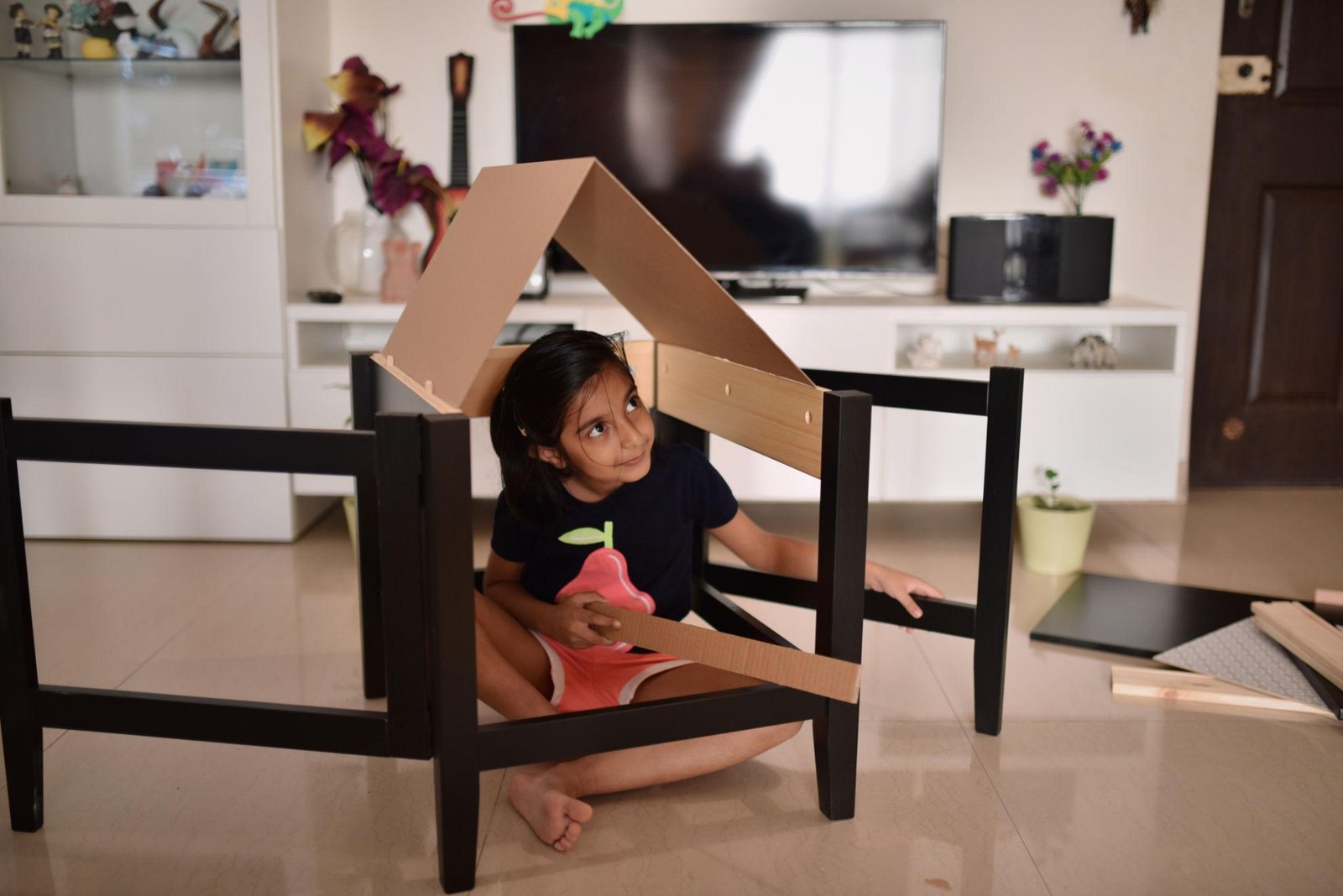
Children need more than school, tuition and organised activities. Discover why unstructured play supports creativity, independence, problem-solving and social development.
Is Your Child's Day Too Busy? Why Children Need Time for Unstructured Play
School, homework, tuition, dance classes, sports practice and extracurricular activities — many children's days are planned almost hour by hour.
Parents organise these activities because they want their children to learn new skills, become confident and have a successful future. These intentions are understandable. But in trying to give children every possible opportunity, we sometimes forget to leave time for something equally important: playing freely without a fixed plan.
Think about the last time your child played without being told what to do. Perhaps they built something with cardboard boxes, made up a game with friends, drew imaginary characters or simply ran around outside.
These moments may look ordinary, but they give children opportunities to explore, make decisions, solve problems and use their imagination.
This kind of child-led activity is called unstructured play. Let's understand why it matters and how parents can make more room for it in everyday life.
- What Exactly Is Unstructured Play?
Unstructured play is an activity where children decide what they want to play, how they want to play and how long they want to continue, within reasonable safety boundaries.
Unlike a formal class or organised activity, there is no fixed lesson, timetable or expected result.
For example:
Building a house using cushions and blankets.
Creating a pretend shop with household objects.
Making up stories with toys.
Playing outdoor games with neighbourhood friends.
Drawing whatever comes to mind.
Exploring leaves, stones and other safe objects in nature.
The important part is that children get to make their own choices rather than following instructions throughout the activity.
- It Helps Children Become Better Problem-Solvers
When adults organise every activity, children often follow ready-made instructions.
But during independent play, they face small challenges that require their own thinking.
Imagine a child trying to build a tower using blocks. It keeps falling down. They may try a different arrangement, use larger blocks at the bottom or change their design completely.
Nobody needs to give them a step-by-step solution.
These small experiences encourage children to experiment, think creatively and find different ways to solve problems.
- Children Learn to Make Their Own Decisions
Many everyday decisions are made for children by adults.
Parents choose their schedules, teachers decide classroom activities and coaches decide what happens during practice.
While guidance is necessary, children also need opportunities to make age-appropriate decisions independently.
During free play, they can decide:
Which game they want to play.
What materials they want to use.
Whether they want to play alone or with others.
How to organise a pretend activity.
What to do when their original idea doesn't work.
Over time, these experiences can help children become more confident in making choices.
- Playing With Other Children Teaches Important Social Skills
Children don't learn cooperation only through classroom lessons.
They also learn it when playing with friends, siblings and other children.
For example, when a group of children creates a game, they must decide the rules, take turns and agree on what happens next.
Sometimes disagreements occur. One child may want to play cricket while another prefers football.
These situations give children opportunities to practise:
Listening to different opinions.
Sharing and taking turns.
Negotiating rules.
Handling disagreements.
Understanding other people's feelings.
They may not get everything right immediately, but these experiences help them understand how friendships work.
- Free Play Gives Children a Chance to Express Themselves
Not every child enjoys expressing ideas through speaking or writing.
Some children communicate their imagination through drawing, building, music, pretend games or physical activities.
During free play, they can explore their interests without worrying about getting an answer correct.
A child might turn an empty cardboard box into a spaceship or create an imaginary restaurant using kitchen toys.
Such activities allow children to experiment with ideas and express their personalities.
- It Helps Children Practise Handling Small Challenges
Children need opportunities to experience manageable challenges while growing up.
During a game, they may lose, make mistakes, disagree with a friend or struggle to complete something they started.
With appropriate adult supervision, these experiences can help them practise patience, flexibility and resilience.
For example, if a child loses a board game, parents don't always need to change the rules to make them win.
Instead, they can offer reassurance and encourage the child to try again.
The goal is not to expose children to unnecessary risks or distress. It is to allow them to handle everyday challenges with suitable support.
- Children Don't Need Expensive Toys to Play Creatively
One common misconception is that children need new toys, expensive games or electronic gadgets to enjoy themselves.
In reality, simple household materials can inspire plenty of creative activities.
Parents can offer:
Cardboard boxes for building houses or vehicles.
Paper and crayons for drawing.
Building blocks for creating different structures.
Old fabric pieces for pretend costumes.
Puzzles and board games.
Safe household containers for sorting and stacking.
Balls, skipping ropes and other simple outdoor play equipment.
Always choose age-appropriate materials and supervise activities involving small objects, tools or potential hazards.
The aim is to provide opportunities, not to spend more money.
- Don't Feel the Need to Direct Every Activity
Parents naturally want to help their children, especially when they see them struggling with something.
But sometimes, stepping back is just as useful as stepping in.
If your child is building something, avoid immediately showing them the correct way.
Instead, ask:
"What are you trying to make?"
"What do you think might work?"
"Would you like to try another idea?"
Allow them to experiment before offering help.
You can remain nearby, show interest and provide support without controlling every part of the activity.
- How Can Busy Parents Make Time for Free Play?
You don't need to completely change your child's daily routine. Even small adjustments can create more opportunities for independent play.
Here are some practical ideas:
Protect a little free time: Leave some space between schoolwork and organised activities rather than filling every available hour.
Encourage outdoor activities: When a safe space is available, allow children to play, explore and move around.
Keep simple materials accessible: Store crayons, blocks, paper and other safe play materials where children can reach them.
Reduce unnecessary screen time: Make room for activities that involve movement, imagination and interaction.
Allow children to choose: Let them decide what they want to do during their free time instead of always selecting an activity for them.
Join occasionally: Parents can participate in games, storytelling or creative activities without taking control of the entire experience.
According to guidance from ChildCare.gov, children benefit from a balance of structured and unstructured play. Research discussed by the American Academy of Pediatrics also highlights the role of developmentally appropriate play in social, emotional and cognitive development.
- What If Your Child Says, "I'm Bored"?
Many parents immediately try to find something entertaining when their child says they are bored.
But you don't always need to solve that feeling instantly.
You can respond with:
"Why don't you think of something you'd like to create or play?"
Initially, your child may not know what to do. Give them some time and keep a few simple materials available.
You can suggest a starting idea, but allow them to take the activity in their own direction.
Boredom doesn't automatically lead to creativity, but having some free time gives children an opportunity to discover their own interests.
Frequently Asked Questions
- What is unstructured play for children?
Unstructured play is child-led activity where children choose what to play and how to play without following a fixed set of instructions or a predetermined outcome.
- Is unstructured play better than organised activities?
Neither is automatically better. Both have value. Organised activities can teach specific skills, while unstructured play gives children more freedom to explore, make decisions and use their imagination.
- How much free playtime should children get?
There is no single fixed duration that suits every age and family routine. Parents should try to provide regular opportunities for play alongside schoolwork, rest and other activities.
- Can children learn through playing at home?
Yes. Building with blocks, drawing, storytelling, pretend games and simple activities at home can support creativity, communication and problem-solving.
- Should parents participate in their children's play?
Yes, when children want them to. Parents can join games, encourage ideas and spend quality time together. However, children should also have opportunities to direct their own play.
- Does free play mean children should be left completely unsupervised?
No. Children still need age-appropriate supervision and safe surroundings. The freedom is about allowing them to lead the activity, not removing parental responsibility.
Final Thoughts
Childhood should not feel like a timetable filled with one activity after another.
Education, sports, hobbies and skill development are important, but children also need time to explore their own interests without being constantly guided.
The next time your child starts playing with an ordinary cardboard box, making up a strange story or inventing a game, don't be too quick to interrupt.
Sometimes, the simplest moments of play provide some of the most valuable learning experiences.
Let children have time to play, imagine, experiment and simply enjoy being children.
 Parenting
 Parenting