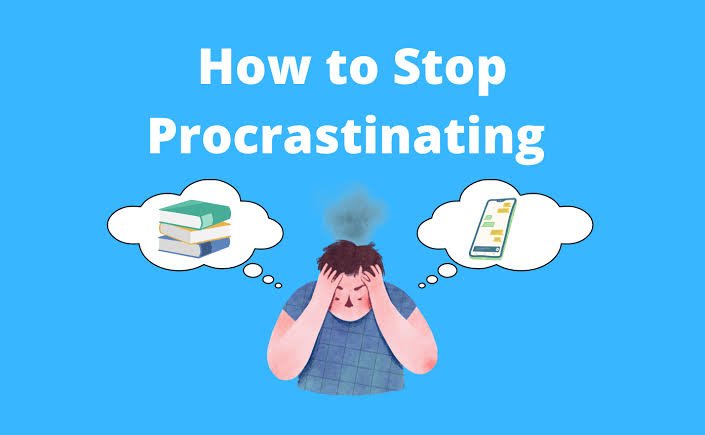
Do you keep postponing homework, delaying revision or spending hours on your phone instead of studying? Procrastination is a common challenge among students, but it can be managed with the right habits. Learn 10 practical strategies to overcome study delays, improve concentration, manage distraction
Introduction: Why Do Students Keep Postponing Their Studies?
"I will start studying after 10 minutes."
For many students, this small delay becomes an hour, and sometimes an entire evening.
You may sit at your study table with your books open, but instead of completing your homework, you start checking messages, watching videos or thinking about how much work is left.
This habit is called procrastination. It means delaying an important task even when you know that completing it would be beneficial.
Students often procrastinate because:
The subject feels too difficult.
The syllabus seems too large.
They do not know where to begin.
They are afraid of making mistakes.
Their phones constantly distract them.
They feel tired or mentally overwhelmed.
They lack a clear study routine.
The biggest problem with procrastination is that it creates a cycle. You delay studying, feel guilty about wasting time, become more stressed and then find it even harder to begin.
The good news is that you do not need extraordinary motivation to break this cycle. You need a practical system that makes starting easier.
Here are 10 effective ways to stop procrastinating and become a more productive student.
- Start With Just 10 Minutes
One of the biggest mistakes students make is waiting until they feel completely motivated to study.
Instead, make a small promise to yourself: study for just 10 minutes.
Choose one simple task, such as reading two pages, solving three questions or revising one concept.
Once you begin, continuing often feels easier because the hardest part was getting started.
Do not worry about completing the entire chapter immediately. Focus on beginning.
Try this: Whenever you feel like postponing your studies, set a 10-minute timer and start your first task.
- Break Big Chapters Into Smaller Tasks
Looking at an entire syllabus can make studying feel overwhelming.
For example, writing "Complete Physics" on your to-do list is not a useful starting point because the task is too broad.
Break it into smaller activities:
Read one concept.
Understand the related formula.
Solve five practice questions.
Review your mistakes.
Revise the important points.
Small tasks are easier to understand, begin and complete.
Every completed task also gives you a sense of progress, which can encourage you to continue.
- Create a Daily Study Priority List
Not every task has the same level of importance.
Instead of making a long list of everything you need to study, identify your three most important academic tasks for the day.
For example:
Complete the assigned Mathematics homework.
Revise one Chemistry chapter.
Practise English grammar for 20 minutes.
Complete the most important task first whenever possible.
A short, realistic priority list is often more useful than an ambitious timetable that you cannot follow.
- Keep Your Mobile Phone Away While Studying
Smartphones are among the most common sources of study distractions.
A single notification can interrupt your concentration and encourage you to open another application.
Try these practical changes:
Keep your phone outside your study area.
Turn off unnecessary notifications.
Use focus mode when studying.
Avoid opening social media during study breaks.
Keep entertainment applications closed until your planned study session is complete.
If you need your phone for online classes or educational resources, use only the required applications and avoid unnecessary browsing.
- Use the 25-Minute Study Technique
If you find it difficult to sit and study for long periods, try the Pomodoro Technique.
It divides work into short, focused sessions.
A simple routine looks like this:
Study for 25 minutes.
Take a 5-minute break.
Repeat the process.
After four sessions, take a longer break.
During each study session, focus on one specific task.
For example, use one session for Mathematics problems and another for revising Science concepts.
You can adjust the session length according to your age, attention span and the difficulty of the subject.
The objective is to make focused study manageable rather than forcing yourself to sit for hours without a break.
- Stop Waiting for the Perfect Study Environment
Some students spend more time arranging their desks, selecting stationery and searching for the perfect timetable than actually studying.
A comfortable study environment is helpful, but perfection is not necessary.
You only need:
A reasonably quiet place.
Your books and notebooks.
A comfortable chair and suitable lighting.
Water nearby.
A clear idea of what you will study.
Do not postpone studying because your desk is not perfectly organised or your notes are incomplete.
Start with what you already have.
- Reward Yourself After Completing Small Goals
Positive rewards can make studying feel more manageable.
For example:
Finish your homework and listen to your favourite music.
Complete a chapter and enjoy a short walk.
Finish a practice test and spend time on a hobby.
Complete your daily targets and enjoy a family activity.
Keep rewards short and avoid using activities that make it difficult to return to studying.
The purpose is to recognise effort and build a consistent routine.
- Identify Why You Are Avoiding a Particular Subject
Sometimes procrastination is not caused by laziness. It happens because a student finds a particular subject confusing or difficult.
For example, you may keep avoiding Mathematics because you do not understand an earlier concept.
Instead of repeatedly postponing the chapter, identify the exact problem.
Ask yourself:
Which concept am I unable to understand?
Do I need to revise an earlier topic?
Am I struggling with the language of the question?
Do I need someone to explain the concept differently?
Ask a teacher, parent or tutor for help when necessary.
Understanding the reason behind your delay can help you find a more effective solution.
- Track Your Progress Every Day
Students sometimes feel that they are not improving because they focus only on the amount of syllabus remaining.
Start recording what you complete each day.
You can maintain a simple study tracker with:
Chapters completed.
Questions practised.
Homework finished.
Topics revised.
Difficult concepts identified.
At the end of the week, review your progress.
This helps you understand where your time is going and which areas require more attention.
Remember to measure improvement rather than expecting every day to be perfect.
- Follow a Consistent Sleep and Study Routine
Staying awake late every night to complete unfinished work can affect your energy and concentration the next day.
A consistent routine helps students manage academic responsibilities more effectively.
Try to:
Wake up at a regular time.
Study during the hours when you feel most alert.
Take short breaks between focused sessions.
Avoid unnecessary late-night screen use.
Get sufficient sleep according to your age.
Keep some time for exercise and relaxation.
A healthy routine supports learning and makes it easier to remain consistent.
A Simple Daily Study Routine to Beat Procrastination
Students do not need to follow an extremely complicated timetable.
Here is an example of a manageable routine that can be adjusted according to school and coaching schedules.
After school: Take some rest, have a meal and relax.
First study session: Complete important homework or pending assignments.
Second study session: Focus on a difficult subject or topic.
Short break: Walk, stretch or have a healthy snack.
Third study session: Practise questions or revise previously studied chapters.
Evening: Spend some time on hobbies, sports or family activities.
Before bedtime: Review the next day's priorities and prepare school materials.
The most important thing is to choose a schedule that you can realistically follow.
Common Mistakes Students Make While Trying to Stop Procrastinating
Even when students decide to become more disciplined, certain habits can make the process difficult.
Avoid these common mistakes:
Making unrealistic timetables: Planning to study for 10 hours when you are currently managing only two focused hours can create unnecessary pressure.
Trying to study everything at once: Focus on one task at a time instead of jumping between multiple subjects.
Waiting for motivation: Motivation changes from day to day. A consistent starting routine is more dependable.
Taking long breaks: A short break can refresh your mind, but an unplanned break may turn into an hour of scrolling.
Ignoring difficult topics: Avoiding challenging subjects only makes pending work grow.
Feeling guilty after wasting time: Instead of spending more time worrying, restart with one small task.
How Parents Can Help Children Overcome Procrastination
Parents can support children by creating a positive study environment rather than constantly reminding them to study.
Here are some useful approaches:
Help children divide large assignments into smaller tasks.
Encourage realistic daily study goals.
Avoid comparing their progress with other students.
Appreciate consistency and effort.
Help identify subjects where additional support is needed.
Provide a comfortable study space.
Encourage breaks, physical activity and adequate sleep.
If a child repeatedly struggles to begin tasks, parents should try to understand the underlying difficulty rather than immediately labelling the child as lazy.
Sometimes students need clearer instructions, additional academic support or help managing stress.
Conclusion: Stop Waiting and Take the First Small Step
Procrastination does not disappear overnight. It improves through small decisions repeated every day.
You do not need to complete an entire syllabus in one sitting or follow a perfect timetable from tomorrow.
Start with one chapter, one assignment or even 10 minutes of focused study.
Keep your phone away, divide large tasks into smaller steps and recognise your daily progress.
Most importantly, remember that a productive student is not someone who never wastes time. It is someone who learns to restart, stay consistent and keep moving towards their goals.
For more study tips, exam preparation advice, career guidance and educational resources, visit GharMeShiksha.com.
 Study Tips
 Study Tips
 Study Tips