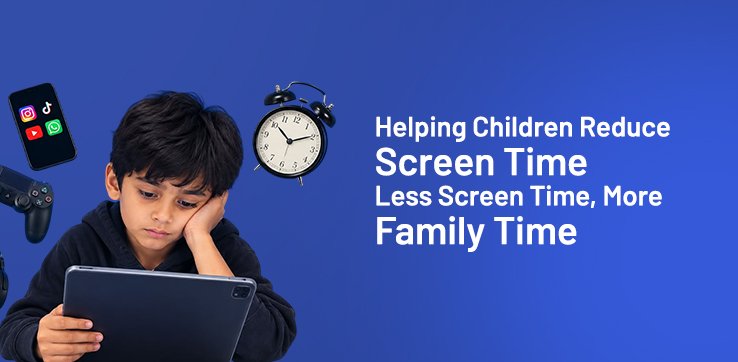
Children today are growing up surrounded by smartphones, tablets, video games and social media. Although technology offers educational benefits, excessive recreational screen use can interfere with sleep, physical activity, family interaction and learning routines.
How to Reduce Children's Screen Time: 12 Effective Parenting Tips Every Parent Should Know in 2026
Does your child ask for a mobile phone immediately after waking up? Do they become upset when you ask them to stop watching YouTube or playing mobile games?
If your answer is yes, you are not alone.
Parenting has changed significantly in the digital age. Earlier, parents worried about children spending too much time watching television. Today, smartphones, tablets, online games and social media have become a regular part of children's lives.
Technology can support education, creativity and communication. However, when recreational screen use starts replacing outdoor activities, reading, sleep and family interaction, parents may need to rethink their children's digital habits.
The biggest challenge is that simply taking away a mobile phone can sometimes lead to arguments, frustration and emotional reactions.
So, what should parents actually do?
In this article, GharmeShiksha.com shares 12 practical parenting strategies to help children develop healthier screen habits without turning every day into a battle.
- Understand Why Your Child Loves Spending Time on Mobile Phones
Before trying to reduce screen time, understand why your child enjoys using digital devices.
Children may use mobile phones for different reasons:
- Watching entertaining videos.
- Playing online games.
- Talking to friends.
- Exploring educational content.
- Avoiding boredom.
- Relaxing after school.
- Seeking entertainment when parents are busy.
Sometimes, excessive mobile use can also be connected to stress, loneliness or difficulties at school.
Instead of immediately blaming your child, start a conversation.
Ask questions such as:
- What do you enjoy watching?
- Which games do you like the most?
- What makes you want to use your phone?
- Would you like to try another activity?
Understanding the reason behind the habit makes it easier to find a suitable solution.
- Create a Family Screen Time Schedule
One of the easiest ways to manage children's digital habits is to establish a predictable routine.
Instead of repeatedly saying no, create a schedule that clearly explains when devices can be used.
For example:
- Morning: No recreational mobile use before school.
- After school: Homework, rest and outdoor activities.
- Evening: A planned period for entertainment.
- Dinner: No mobile phones at the dining table.
- Before bedtime: Screen-free relaxation.
The schedule should be suitable for your child's age, school routine and individual needs.
Remember, educational screen use and entertainment screen use are not necessarily the same thing.
- Stop Using Mobile Phones as the First Solution to Boredom
Many children receive a mobile phone whenever they become bored, restless or upset.
Although this may provide temporary relief, children also need opportunities to develop independent play and emotional regulation skills.
Instead of immediately offering a screen, introduce alternatives such as:
- Drawing and colouring.
- Building blocks.
- Puzzles.
- Storybooks.
- Board games.
- Outdoor activities.
- Creative craft projects.
Allowing children to experience occasional boredom can encourage imagination and independent thinking.
- Introduce Screen-Free Family Time
Children often learn habits by observing their parents.
If adults continuously check their phones during meals or conversations, children may find it difficult to understand why they are expected to follow different rules.
Create screen-free family moments.
Some examples include:
Family meals: Keep phones away while eating together.
Evening conversations: Ask children about their school day.
Weekend activities: Play board games, visit parks or cook together.
Bedtime routines: Replace mobile videos with storytelling or reading.
These small habits can improve family interaction and create stronger relationships.
- Never Reduce Screen Time Through Constant Punishment
One common parenting mistake is suddenly taking away every digital device.
This approach may create resistance, especially if children are already accustomed to using mobile phones for long periods.
Instead, introduce changes gradually.
For example:
- Explain why you are changing the rules.
- Agree on reasonable boundaries.
- Reduce unnecessary recreational screen sessions.
- Offer alternative activities.
- Appreciate positive changes.
The goal is not to make children afraid of technology.
The goal is to teach them how to use it responsibly.
- Encourage Outdoor Activities and Physical Exercise
Children need opportunities to move, explore and interact with the world around them.
Encouraging physical activities can help create a healthier balance between digital and offline experiences.
Parents can introduce:
- Cycling.
- Football.
- Badminton.
- Swimming.
- Walking.
- Dancing.
- Outdoor group games.
Try to make physical activities enjoyable rather than treating them as another compulsory task.
When children discover activities they genuinely enjoy, they may become less dependent on digital entertainment.
- Make Reading an Interesting Daily Habit
Reading is one of the most valuable habits parents can encourage.
However, forcing children to read difficult books may make the activity feel like another school assignment.
Start with subjects they enjoy.
You can introduce:
- Storybooks.
- Comics.
- Picture books.
- Science magazines.
- Children's newspapers.
- Age-appropriate biographies.
- Educational activity books.
Spend 15–20 minutes reading together and allow children to select their favourite stories.
Reading together can also improve vocabulary, imagination and communication skills.
- Use Parental Controls and Digital Safety Settings
Technology management should include online safety, not just screen duration.
Parents should understand which applications their children use and what kind of content they access.
Useful precautions include:
- Enable age-appropriate content restrictions.
- Review app permissions.
- Disable unnecessary notifications.
- Restrict unauthorised purchases.
- Use appropriate parental controls.
- Discuss online privacy.
- Keep communication open about uncomfortable online experiences.
Children should also understand that they must never share personal information, passwords or private photographs with unknown people online.
- Avoid Giving Young Children Personal Devices Too Early
Parents sometimes provide smartphones or tablets because other children in their social circle already have them.
However, a child's readiness for a personal device should depend on their maturity, needs and the family's ability to supervise its use.
For younger children, shared family devices may provide better opportunities for supervision and co-viewing.
Before giving a child a personal device, discuss:
- Why they need it.
- Which applications they can access.
- When they can use it.
- Who they can communicate with.
- How they should respond to online risks.
A personal device should come with responsibility and guidance.
- Become a Digital Role Model for Your Children
You cannot expect children to follow healthy digital habits if adults continuously ignore similar boundaries.
Parents should examine their own mobile usage.
Try these simple changes:
- Avoid checking notifications during family conversations.
- Keep your phone away during meals.
- Reduce unnecessary social media scrolling.
- Avoid using phones while spending time with children.
- Create a common charging area outside bedrooms.
When children see adults following the same rules, they may find it easier to accept them.
- Reward Healthy Habits Instead of Only Focusing on Screen Restrictions
Positive reinforcement can help children develop new habits.
Instead of constantly reminding children about what they cannot do, recognise the healthy choices they make.
For example:
- Appreciate them when they complete homework without distractions.
- Celebrate a weekend spent playing outdoor games.
- Praise independent reading.
- Encourage them when they follow their routine.
Rewards do not always need to involve money or expensive gifts.
Quality family time, appreciation and enjoyable activities can also be meaningful.
- Talk to Your Child Instead of Only Giving Instructions
Communication is one of the most important parts of effective parenting.
Children are more likely to understand boundaries when they feel heard and respected.
Rather than saying, "Stop using your phone immediately," try explaining:
"We enjoy using technology, but our bodies and minds also need time for playing, reading and sleeping. Let's decide together how we can balance everything."
Allow your child to participate in creating family rules.
This encourages responsibility instead of making screen management feel like a punishment.
- How Much Screen Time Is Healthy for Children?
There is no single screen-time limit that is suitable for every age and situation.
The American Academy of Pediatrics emphasises considering the quality and purpose of screen use, the child's age and whether digital activities interfere with important aspects of everyday life.
American Academy of Pediatrics+1
For younger children, age-specific recommendations are particularly important.
For example, the World Health Organization recommends that sedentary screen time for children aged 2–4 should be no more than one hour daily, with less being better.
UNICEF Global
Parents should distinguish between:
- Educational learning.
- Video calls with family.
- Creative digital activities.
- Recreational videos.
- Online gaming.
- Social media entertainment.
The objective should be healthy digital habits, adequate sleep, physical activity and meaningful social interaction.
- Warning Signs That Your Child's Screen Habits Need Attention
Parents should pay attention when digital activities begin affecting everyday routines.
Some possible warning signs include:
- Regularly refusing to stop using devices.
- Losing interest in previously enjoyed hobbies.
- Avoiding family interactions.
- Frequently using devices during homework.
- Staying awake late to watch videos or play games.
- Becoming upset whenever device use is restricted.
- Neglecting physical activities.
These behaviours do not automatically mean a child has an addiction.
However, persistent problems may indicate that the family needs to reassess digital habits and seek professional guidance if necessary.
- Five Screen-Free Activities Parents Can Try at Home
Reducing mobile use becomes easier when children have enjoyable alternatives.
Here are five simple activities that parents can introduce.
- Family storytelling: Ask children to create their own stories and share them with everyone.
- Art and craft: Use paper, colours, clay and recycled materials to create something interesting.
- Indoor treasure hunt: Hide small objects and provide clues for children to discover them.
- Cooking together: Allow children to participate in simple, age-appropriate kitchen activities under supervision.
- Educational experiments: Explore simple Science activities using safe household materials.
These activities provide opportunities for creativity, communication and practical learning.
- How Can Parents Balance Screen Time and Children's Education?
Completely avoiding technology is not always practical in modern education.
Many schools use digital platforms for assignments, educational videos, research and online classes.
Therefore, parents should focus on balancing educational technology with recreational screen use.
Some useful strategies include:
- Set separate timings for homework and entertainment.
- Encourage children to take breaks during long study sessions.
- Avoid unnecessary social media use during homework.
- Choose age-appropriate educational resources.
- Encourage offline revision and reading.
- Provide individual academic guidance where required.
If children struggle with particular subjects, personalised tuition can also help them build confidence and understand difficult concepts.
At GharmeShiksha.com, we believe that effective education should combine good teaching, family support and healthy learning habits.
Conclusion: Good Parenting Is About Balance, Not Bans
Technology is now an important part of children's lives, and completely separating children from digital devices may not be practical.
However, parents can teach children to use technology responsibly while maintaining a healthy balance between screen activities and real-world experiences.
The most effective approach is not constant punishment or strict restrictions.
It is communication, consistency, positive role modelling and meaningful family interaction.
 Parenting
 Parenting