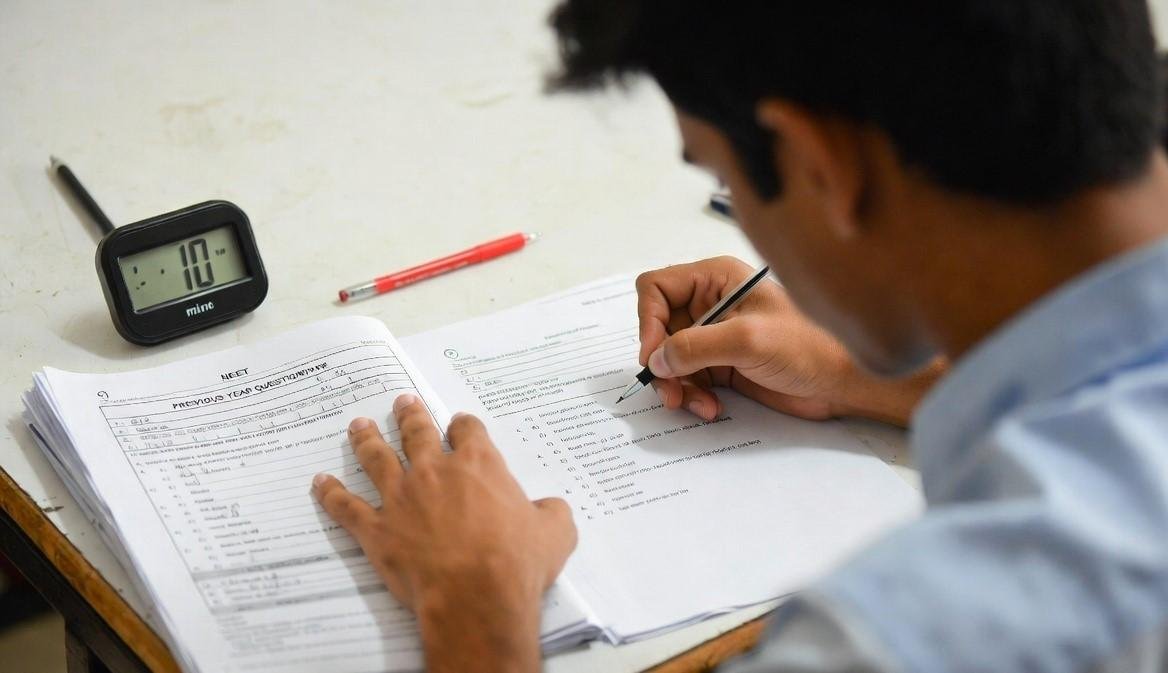
Is your syllabus still incomplete before exams? Discover practical ways to prioritise chapters, manage revision, practise question papers and prepare confidently without unnecessary stress.
Syllabus Still Incomplete? How to Prepare Smartly Without Panicking Before Exams
Exams are approaching, the timetable is getting closer, and there are still chapters left to complete. Does this situation sound familiar?
Many students experience this every year. They begin the academic session with good intentions, but school assignments, distractions, difficult subjects and unexpected breaks can affect their preparation.
When the syllabus remains incomplete, students often make one of two mistakes: they either panic and try to study everything at once or spend too much time worrying instead of taking action.
But there is a better approach.
You don't necessarily need to study for 12 hours a day to make progress. What you need is a realistic plan that helps you cover important topics, revise what you already know and practise answering questions.
Here are some practical ways to prepare when your syllabus is still incomplete.
- Stop Looking at the Entire Syllabus at Once
Looking at a long list of unfinished chapters can make exam preparation feel overwhelming.
Instead, divide your syllabus into three groups:
Completed topics: Chapters you have already studied and need to revise.
Partially completed topics: Chapters where you understand some concepts but need more practice.
Untouched topics: Chapters you haven't started yet.
This simple exercise helps you understand where you actually stand.
Once you have divided the syllabus, you can decide how much time each group needs instead of treating every chapter equally.
- Identify Important Topics Without Ignoring the Syllabus
Not every topic requires the same amount of preparation time.
Check your textbook, prescribed syllabus, sample papers and previous-year question papers to understand the question patterns.
Look for:
Concepts that appear repeatedly in practice papers.
Topics carrying significant marks according to the official blueprint, if available.
Chapters that form the foundation for other topics.
Questions where you regularly make mistakes.
Start with topics that need attention and are important for your examination.
However, don't completely skip other chapters based on guesses about what will appear in the paper. Exam patterns can change.
- Follow a Realistic Daily Study Plan
One of the biggest mistakes students make during exam season is creating an unrealistic timetable.
For example, planning to complete five difficult chapters in one day may look impressive on paper, but it can quickly become frustrating.
Instead, set small and achievable targets.
A daily plan could include:
One session for completing an unfinished chapter.
One session for revising a previously studied topic.
One session for solving practice questions.
A short session for reviewing mistakes.
Adjust the duration according to your school schedule, subject difficulty and available time.
Remember, completing three realistic targets is more useful than writing ten targets and finishing none.
- Don't Just Read Chapters—Test Yourself
Reading a chapter repeatedly can make the information feel familiar, but familiarity doesn't always mean you can recall it during an examination.
After completing a topic, close your textbook and try answering questions from memory.
For example:
Write important definitions without looking.
Solve mathematical problems independently.
Explain scientific processes in your own words.
Recall important historical events and their sequence.
Attempt short-answer questions without checking your notes.
This approach is called retrieval practice. It helps you practise bringing information back from memory.
Research reviews have found that retrieval practice and spaced revision can support learning and long-term retention. <Cite refs={["turn563572search1","turn563572search0"]}/>
- Use Previous-Year Papers to Understand the Examination
Previous-year question papers are useful preparation tools, especially when you are unsure how to practise.
They can help you understand:
The structure of the examination.
Different types of questions.
How concepts are tested.
How much writing is expected.
Which areas require more practice.
Don't simply read the questions and answers.
Try solving a paper under timed conditions. Once finished, check your answers and identify where you lost marks.
If your board has released official sample papers or a marking scheme, use those as well.
- Give More Attention to Your Weak Subjects
Students often spend more time studying subjects they already enjoy.
For example, someone who likes Science may keep revising Science while postponing Mathematics or English.
This creates an imbalance.
During exam preparation, identify the subjects where you need the most improvement.
You can:
Practise difficult questions regularly.
Ask teachers to explain confusing concepts.
Watch reliable educational explanations when necessary.
Solve a small set of questions every day.
Revisit mistakes instead of avoiding them.
You don't have to become perfect in every subject overnight. Consistent improvement is what matters.
- Make Short Revision Notes for the Final Days
When examinations are close, going through entire textbooks again can become difficult.
This is where short revision notes can help.
Prepare concise notes containing:
Important formulas.
Key definitions.
Dates and important events.
Scientific diagrams and labels.
Difficult concepts.
Common mistakes.
Points you frequently forget.
Keep these notes organised by subject and chapter.
Avoid copying entire textbook paragraphs. Your notes should help you revise quickly, not become another lengthy textbook.
- Stop Comparing Your Preparation With Other Students
One student may have completed the entire syllabus while another may still be working through important chapters.
Constantly comparing your progress can create unnecessary pressure.
Remember, students have different learning speeds, subject strengths and study routines.
Instead of asking your friends how many chapters they have completed every day, focus on your own progress.
Ask yourself:
What did I complete today?
Which topic became easier?
What mistake did I correct?
What should I work on tomorrow?
Your preparation should be guided by your own needs, not someone else's timetable.
- Don't Sacrifice Sleep to Complete the Syllabus
Staying awake all night may seem like a quick way to finish unfinished chapters, but regularly losing sleep can affect concentration, attention and memory.
Try to maintain a consistent sleeping routine, take short breaks during long study sessions and avoid unnecessary late-night screen use.
If you have limited time, prioritise your remaining topics rather than trying to complete everything through overnight study.
A rested mind can help you approach questions more calmly during an examination.
A Simple 7-Day Exam Preparation Plan
If you are feeling stuck, try following this example for one week. Adjust it according to your actual syllabus and examination schedule.
Day 1: List unfinished chapters and identify weak subjects.
Day 2: Complete one important unfinished topic and revise an earlier chapter.
Day 3: Practise questions from Mathematics or another problem-solving subject.
Day 4: Revise theory-based subjects and prepare short notes.
Day 5: Attempt a previous-year paper or sample paper.
Day 6: Review mistakes and revisit difficult topics.
Day 7: Take a short self-test and plan the next week's preparation.
The purpose is to build momentum and understand your progress, not to follow a rigid schedule.
Common Mistakes to Avoid When Exams Are Near
Be careful of these habits:
Making a timetable that is impossible to follow.
Spending too much time decorating notes.
Ignoring difficult chapters completely.
Watching study videos without practising questions.
Revising only familiar topics.
Constantly checking how much other students have completed.
Staying awake all night before an examination.
Leaving practice papers until the very last day.
Avoiding these mistakes can make your remaining preparation more organised.
Frequently Asked Questions
- What should I do if my syllabus is incomplete before exams?
First, identify unfinished chapters and divide them according to your understanding. Prioritise important concepts, revise completed topics and practise questions regularly.
- Should I complete the syllabus or start revision first?
Try to balance both. Continue covering essential unfinished topics while revising what you have already studied. Avoid leaving all revision until the final days.
- Are previous-year question papers enough for exam preparation?
No. They are useful for understanding question patterns and practising, but students should also study the prescribed syllabus, textbooks and official sample papers.
- How many hours should I study before exams?
There is no fixed number suitable for everyone. Focus on productive study sessions, realistic targets, regular breaks and adequate sleep rather than simply counting hours.
- What is the best way to revise difficult chapters?
Break the chapter into smaller concepts, understand the basics, solve questions and test yourself without looking at your notes. Ask a teacher for help if a concept remains unclear.
Final Thoughts
An incomplete syllabus does not mean your exam preparation is over. It simply means you need to use your remaining time carefully.
Instead of panicking, identify your priorities, create achievable daily targets and give proper attention to revision and practice.
Don't waste valuable time worrying about what you could have completed earlier. Focus on what you can improve today.
Remember, the goal is not to study everything in a hurry. It is to prepare as effectively as possible with the time you have left.
 Exam Preparation
 Exam Preparation
 Exam Preparation