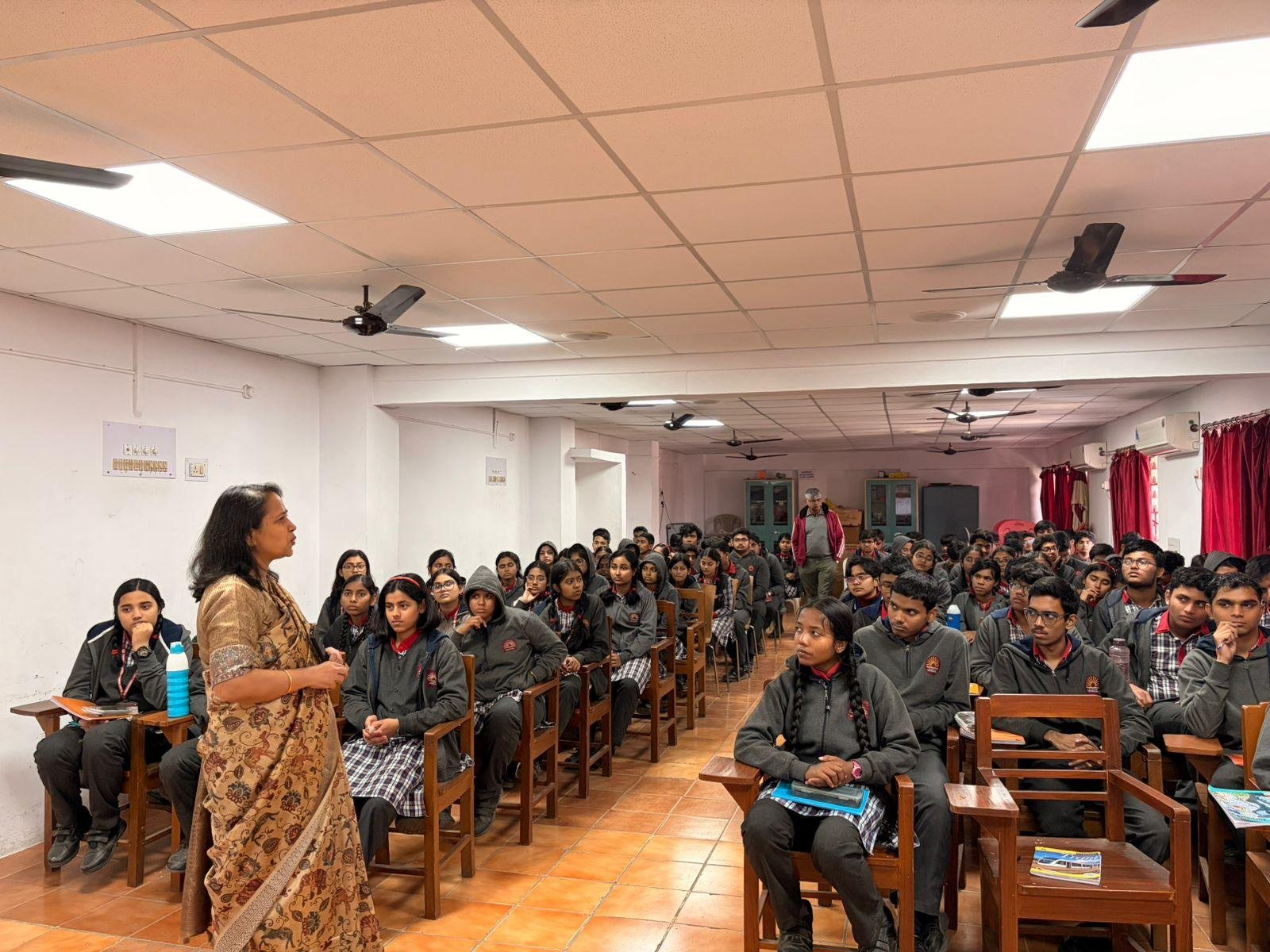
Interested in several different careers? Learn how to identify your strengths, explore professions, compare courses and make thoughtful career decisions without unnecessary pressure.
- Don't Confuse Having Many Interests With Being Confused
Some students enjoy subjects that seem completely unrelated.
For example:
You enjoy Biology but also love photography.
You like Mathematics but are interested in business.
You enjoy writing but are curious about technology.
You like helping people but also want to explore entrepreneurship.
You don't necessarily have to abandon one interest to pursue another.
Many careers combine different skills. Someone interested in technology and creativity might explore UI/UX design. A student who enjoys Biology and technology might look into biotechnology or health technology.
Instead of forcing yourself to choose one interest immediately, explore how different fields can connect.
- Understand What You Enjoy Doing, Not Just What Sounds Impressive
Sometimes students become interested in careers because they sound prestigious or attractive.
For example, becoming a doctor, an IAS officer, an engineer or a successful entrepreneur may sound exciting. But have you thought about the actual work involved in these professions?
Ask yourself:
Do I enjoy solving problems?
Do I like working with people?
Am I interested in research and experiments?
Do I enjoy creating things?
Would I prefer practical work or theoretical learning?
Do I like explaining ideas to others?
Think about the activities you genuinely enjoy, not just the job titles that impress people.
- Identify Your Strengths Along With Your Interests
Enjoying something and being good at it are not always the same.
You might love drawing but still need to improve your design skills. You may enjoy Science but find certain concepts difficult.
That doesn't mean you should immediately give up.
Identify three things:
Interests: Activities and subjects that attract your attention.
Strengths: Skills you already perform well.
Areas to improve: Skills you are willing to develop with practice.
Your strengths can include communication, creativity, logical thinking, leadership, observation, patience or problem-solving.
You don't need to be perfect before choosing a direction. Many professional skills develop through education and experience.
- Explore Careers Through Small Experiments
One of the biggest mistakes students make is choosing a career based entirely on imagination.
You may think you want to become a graphic designer, but have you ever tried creating a poster or designing a simple logo?
You may be interested in journalism, but have you tried writing an article or interviewing someone?
Before making a major decision, try small activities related to your interests.
For example:
Interested in coding? Build a simple website or try a beginner programming course.
Interested in teaching? Explain a topic to a younger student.
Interested in business? Create a small business idea and calculate its costs.
Interested in photography? Complete a small photo project.
Interested in psychology? Explore introductory educational material and learn about the profession.
Interested in law? Read about basic legal concepts and observe how legal professionals work.
These experiments can help you understand whether you enjoy the actual activity, not just the idea of the career.
- Research the Education and Skills Required
A career may sound interesting, but you should also understand the pathway required to enter that profession.
Find out:
Which subjects or qualifications are required?
What courses are available?
Are entrance examinations necessary?
How many years of study are involved?
What skills should you develop?
What are the different career opportunities in that field?
For example, someone interested in architecture should research the required entrance route, course structure and design-related skills.
Similarly, a student interested in psychology should understand the relevant undergraduate and postgraduate study pathways and professional requirements.
Use official university websites, recognised education portals and professional bodies for accurate information.
- Don't Choose a Career Only Because Your Friends Are Choosing It
It is natural to discuss career plans with friends.
However, problems can arise when students start selecting the same courses simply because their friends are doing so.
Your friend may be interested in engineering, while you may enjoy literature, economics or design.
Both choices can be worthwhile, but they may not suit the same person.
Before making a decision, ask yourself:
"Would I still choose this course if none of my friends were choosing it?"
If the answer is no, spend more time exploring your own interests.
- Consider the Practical Side of Your Career Choice
Passion is important, but career planning also involves practical considerations.
Students and parents should discuss:
Course fees and available financial support.
Location and college facilities.
Admission requirements.
Duration of education.
Internship and practical training opportunities.
Career options after completing the course.
Opportunities for further study.
Don't choose a course based only on advertisements or promises of high salaries.
Research the actual requirements and opportunities before making a commitment.
- Talk to People Who Already Work in Your Interested Fields
Reading about a profession is useful, but speaking to someone who actually works in that field can provide a different perspective.
If possible, connect with professionals, teachers, alumni or family members who have experience in your areas of interest.
Ask questions such as:
What does a normal working day look like?
Which skills are most important?
What are the difficult parts of this profession?
What education or training is required?
What would you recommend to someone starting out?
Their experiences can help you understand the reality behind a career.
- Remember That Your Career Interests Can Change
One of the biggest worries among students is making the wrong choice.
Many believe that choosing one course means they must follow the same career for the rest of their lives.
But professional journeys are not always straight lines.
People develop new skills, pursue further education, move into related industries and sometimes change professions entirely.
Your first career preference doesn't have to become your final identity.
The important thing is to make an informed decision with the information available to you today, while remaining open to learning and growth.
A Simple Activity to Help You Discover Your Career Interests
Take a notebook and answer these questions honestly:
- Three subjects I enjoy learning:
Write down the subjects that naturally interest you.
- Three activities I enjoy doing:
Think beyond academics. Include hobbies, creative activities, sports or helping others.
- Three skills I would like to improve:
These could include communication, coding, writing, designing, leadership or analytical thinking.
- Three careers I want to explore:
Don't worry about selecting just one.
- One small activity I can try this month:
Choose a project, workshop, introductory course or conversation with a professional.
After completing this exercise, research your options and discuss them with a teacher, parent or career counsellor.
You don't need to make a final decision after one activity. Use it as a starting point for exploration.
How Parents Can Support Children With Multiple Career Interests
Parents play an important role in career decisions, but support does not mean choosing a profession on behalf of the child.
Here are a few ways parents can help:
Listen to their child's interests without dismissing unfamiliar career options.
Encourage exploration through projects, workshops and practical experiences.
Discuss education costs and career requirements openly.
Introduce children to professionals from different fields.
Avoid comparing their career choices with relatives or classmates.
Give them time to understand their strengths and preferences.
A child who feels heard is more likely to discuss doubts and ask for guidance when making important decisions.
Frequently Asked Questions
- Is it normal to have multiple career interests?
Yes. Students often enjoy different subjects and activities. Exploring several options can help them understand their strengths and discover careers that combine different interests.
- How do I choose between two completely different career options?
Research both professions, understand their education requirements and try small activities related to each. Compare your interests, abilities, practical circumstances and long-term goals before deciding.
- Should I choose a career based on my passion or my strengths?
Consider both. A good career decision also takes education requirements, personal values, financial circumstances and available opportunities into account.
- Can I change my career after choosing a college course?
In many cases, yes. The options available will depend on your qualifications, skills and the requirements of the new field. Some career changes may require additional education or training.
- Can a career aptitude test tell me exactly what I should become?
No. An aptitude assessment can help you understand certain abilities and explore possibilities, but it cannot decide your future. Your interests, experiences, goals and preferences matter too.
- When should students start exploring career options?
Students can begin exploring different subjects and professions during their school years. Career research becomes particularly useful when making subject, stream and higher education decisions.
Final Thoughts
Having too many interests is not a problem that needs to be solved immediately. It can be an opportunity to discover different skills, professions and possibilities.
Don't choose a career simply because it is popular, because your friends prefer it or because someone says it guarantees success.
Take time to understand yourself, explore different fields and learn what each profession actually involves.
You don't need to know exactly where you will be ten years from now. You just need to take your next step thoughtfully.
Your career journey is not about finding the most impressive job title. It is about discovering a direction where your interests, abilities and goals can grow together.
 Career Guidance
 Career Guidance