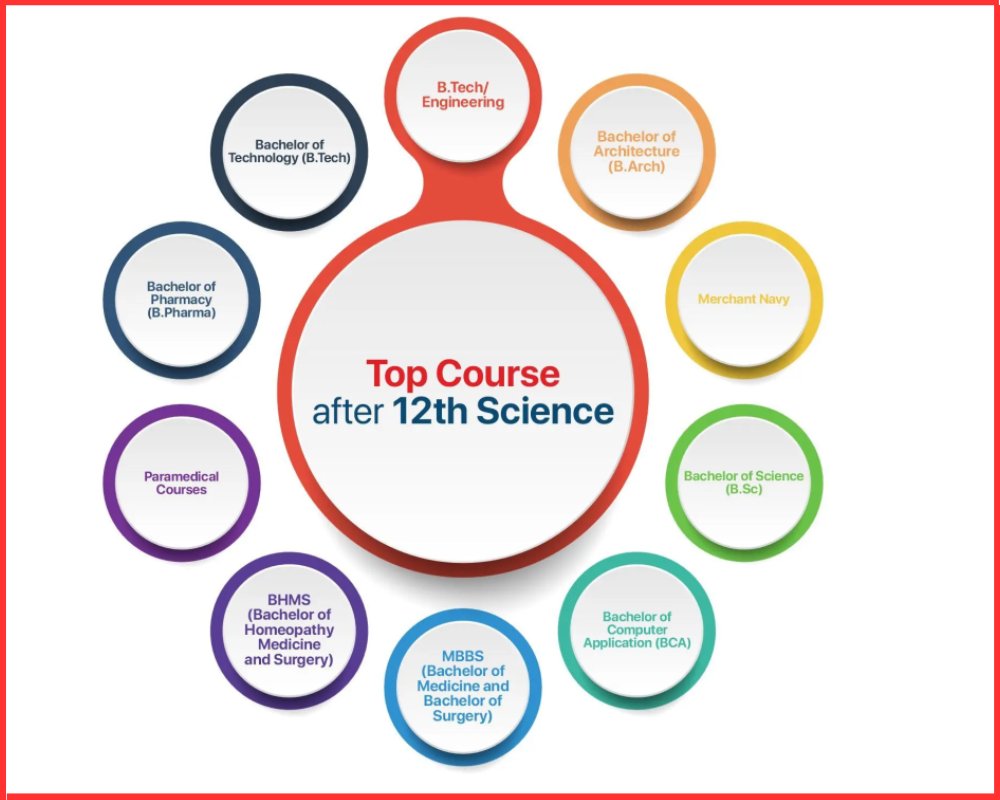
NEET and JEE are not the only paths to a successful career after Class 12. Students who do not appear for these examinations or do not achieve their desired results can explore several other opportunities in technology, healthcare, business, design, finance, law and creative industries.
Introduction: Is Your Career Over If You Don't Clear NEET or JEE?
Every year, millions of Indian students prepare for competitive entrance examinations such as NEET and JEE. For many families, these examinations become the centre of a student's academic journey.
But what happens when a student does not qualify?
Does it mean there are no good career opportunities left?
Absolutely not!
NEET and JEE are important entrance examinations for particular educational pathways, but they do not define a student's intelligence, potential or future success.
India offers numerous career opportunities beyond medical and engineering entrance examinations. Students can build successful professional lives in technology, healthcare, finance, management, law, design, education and many other fields.
The most important thing is to identify your interests, understand your strengths and select a course that matches your long-term goals.
Here are 12 career options students should explore after Class 12 in 2026.
- Data Science and Data Analytics
Data has become an important resource for modern businesses. Companies use data to understand customer behaviour, improve products and make business decisions.
Data science and analytics professionals help organisations understand large amounts of information.
Possible courses:
- B.Sc. Data Science
- B.Sc. Statistics
- BCA with relevant specialisation
- B.Tech in eligible computing-related disciplines
- Bachelor’s programmes in Mathematics or Economics with analytics training
Career opportunities:
- Data Analyst
- Business Analyst
- Data Scientist
- Research Analyst
- Business Intelligence Analyst
Students interested in mathematics, statistics and problem-solving can explore this field.
- Bachelor of Computer Applications (BCA)
Students who enjoy computers and technology can consider BCA as an alternative to traditional engineering pathways.
The course generally introduces students to programming, databases, computer applications and software development.
Career opportunities:
- Software Developer
- Web Developer
- Application Developer
- Database Administrator
- IT Support Specialist
Students should compare college curricula, practical training, internships and eligibility requirements before applying.
- Digital Marketing
Digital marketing has become an important part of business growth. Organisations use search engines, social media, websites and online advertising to connect with customers.
Students interested in creativity, communication and business can explore this field.
Career opportunities:
- SEO Executive
- Social Media Manager
- Content Strategist
- Performance Marketing Executive
- Digital Marketing Analyst
Students can begin by learning SEO, content marketing, social media strategy, analytics and online advertising.
- Bachelor of Business Administration (BBA)
BBA is a popular undergraduate option for students interested in business and management.
The course introduces students to marketing, finance, human resources, operations and business strategy.
Career opportunities:
- Business Development Executive
- Marketing Executive
- HR Executive
- Operations Associate
- Management Trainee
Students can later pursue an MBA or other specialised qualifications depending on their goals.
- Psychology
Psychology is an interesting field for students who want to understand human behaviour, emotions, thinking patterns and social interactions.
Possible courses:
- BA Psychology
- B.Sc. Psychology
- Related undergraduate programmes
Career opportunities and pathways:
- Psychology Research Assistant
- Human Resources Professional
- Behavioural Research Assistant
- Mental Health Support Roles
- Further professional study in psychology
Important: Becoming a licensed or independently practising clinical psychologist requires additional recognised qualifications and compliance with applicable professional regulations. An undergraduate degree alone is not sufficient.
- Bachelor of Design
Students with creative interests can explore professional design education.
Design courses combine creativity, problem-solving and practical skills.
Popular specialisations:
- Fashion Design
- Graphic Design
- Product Design
- Communication Design
- UI/UX Design
- Interior Design
Career opportunities:
- Graphic Designer
- UI/UX Designer
- Fashion Designer
- Product Designer
- Visual Communication Designer
Students should build portfolios and explore admission requirements for design institutions.
- Law
Law can be an excellent career pathway for students interested in justice, public policy, communication and legal systems.
Students can explore integrated undergraduate law programmes such as BA LL.B., BBA LL.B. and B.Com LL.B.
Career opportunities:
- Advocate
- Legal Researcher
- Corporate Legal Associate
- Legal Consultant
- Compliance Professional
Admission requirements vary by institution. Some universities conduct entrance examinations, while others use different admission processes.
- Hotel Management and Hospitality
The hospitality industry offers opportunities in hotels, restaurants, tourism, events and customer experience.
Students who enjoy communication, organisation and working with people can explore this profession.
Career opportunities:
- Hotel Operations Executive
- Front Office Manager
- Event Coordinator
- Food and Beverage Professional
- Hospitality Manager
Students should research recognised institutions and practical training opportunities before enrolling.
- Animation, VFX and Gaming
The demand for digital entertainment, animation, visual effects and interactive media has created interesting opportunities for creative students.
Possible learning pathways:
- Animation
- 3D Modelling
- Visual Effects
- Game Design
- Game Development
- Motion Graphics
Career opportunities:
- 3D Artist
- Animator
- VFX Artist
- Game Designer
- Motion Graphics Designer
A strong portfolio and practical experience can be particularly valuable in this industry.
- Nursing and Allied Healthcare
Students interested in healthcare do not necessarily have to become doctors.
Several healthcare professions provide opportunities to support patients, doctors and medical institutions.
Possible courses include:
- Nursing
- Medical Laboratory Technology
- Radiology and Imaging Technology
- Physiotherapy
- Occupational Therapy
- Operation Theatre Technology
Eligibility, required subjects and admission procedures differ between courses and institutions. Students should check the relevant regulatory and institutional requirements.
- Chartered Accountancy and Finance
Students interested in accounting, mathematics, business and financial management can explore professional finance-related pathways.
Chartered Accountancy is one established professional qualification in India.
Other opportunities include finance, accounting, taxation and banking-related education.
Career opportunities:
- Chartered Accountant
- Accountant
- Financial Analyst
- Tax Consultant
- Audit Associate
Students should understand the examination structure, registration process and time commitment before choosing a professional qualification.
- Teaching and Education
Teaching is another meaningful career option for students who enjoy explaining concepts and helping others learn.
Students can pursue undergraduate degrees in their preferred subjects and then explore recognised teacher education pathways according to the level and type of teaching they want to enter.
Career opportunities:
- School Teacher
- Subject Specialist
- Online Tutor
- Education Content Developer
- Academic Coordinator
Digital learning has also created opportunities in online tutoring and educational content creation.
How to Choose the Right Career After Class 12?
Having multiple options can create confusion. Students should follow a practical process before selecting a course.
Step 1: Identify Your Interests
Think about the subjects and activities you enjoy. Do you like technology, business, creativity, healthcare or communication?
Step 2: Understand Your Strengths
Identify whether you are stronger in mathematics, communication, analytical thinking, creativity or practical work.
Step 3: Research Course Eligibility
Check the required Class 12 subjects, entrance examinations, minimum marks and admission rules.
Step 4: Compare Colleges
Research accreditation, recognition, faculty, placement information, internships and practical learning facilities.
Step 5: Understand Career Opportunities
Find out what professionals in your chosen field actually do and what qualifications are needed.
Step 6: Discuss Your Decision
Speak with teachers, parents, experienced professionals and qualified career counsellors before making your final choice.
Why Students Should Not Compare Their Careers With Others
One of the biggest mistakes students make after Class 12 is comparing their academic journey with their friends.
Some students clear competitive examinations immediately. Others discover their interests through different courses, internships and professional experiences.
Both journeys can lead to meaningful careers.
A competitive examination result should not become the only measure of a student's ability.
Students should focus on improving their knowledge, developing useful skills and selecting opportunities that suit their individual goals.
Common Mistakes to Avoid While Choosing Courses After Class 12
- Selecting a course only because it is popular.
- Believing that expensive colleges always provide better education.
- Choosing a career under family or social pressure.
- Ignoring college recognition and course eligibility.
- Depending only on placement advertisements.
- Enrolling in courses without understanding the syllabus.
- Ignoring internships and practical experience.
- Assuming that NEET and JEE are the only routes to success.
Frequently Asked Questions (FAQs)
- Can I have a successful career without clearing NEET or JEE?
Yes. Students can explore many other professional pathways, including technology, business, finance, design, law, healthcare and education.
- Which course is best after Class 12 without NEET?
Options include BCA, BBA, B.Sc. programmes, design, law, nursing and allied healthcare courses. The best choice depends on eligibility and personal interests.
- Can Science students choose Commerce or Arts-related careers after Class 12?
Yes. Many courses accept students from different academic streams, subject to their eligibility requirements. Students should check individual university admission rules.
- Is BCA a good alternative to engineering?
BCA can be a suitable option for students interested in computer applications and software-related careers. Practical skills, projects, internships and further qualifications can improve career opportunities.
- Which career has good future opportunities in India?
Technology, healthcare, finance, cybersecurity, renewable energy, design and business are areas worth exploring. Actual career prospects depend on skills, qualifications and industry demand.
- Can I get a good job after a normal graduation degree?
Yes, but career outcomes depend on the degree, institution, practical experience and additional skills. Internships and professional development can help improve employability.
- Should I take a drop year if I don't clear NEET or JEE?
A drop year may be appropriate for some students, but it should be a well-planned decision. Consider your preparation level, goals, financial situation and alternative career options before deciding.
Conclusion: Your Career Is Bigger Than One Examination
Not clearing NEET or JEE does not mean your dreams have ended. It simply means you may need to explore a different route.
India offers numerous educational and professional opportunities for students after Class 12. From technology and healthcare to business, law, design and education, there are many ways to build a meaningful career.
Instead of focusing only on entrance examination results, students should identify their strengths, research different professions and develop skills that will remain valuable throughout their working lives.
Remember: One examination cannot decide your entire future. Your interests, skills, determination and continuous learning matter much more in the long run.
At GharMeShiksha.com, we believe every student deserves the right guidance to discover their potential and build a successful future.
 Career Guidance
 Career Guidance