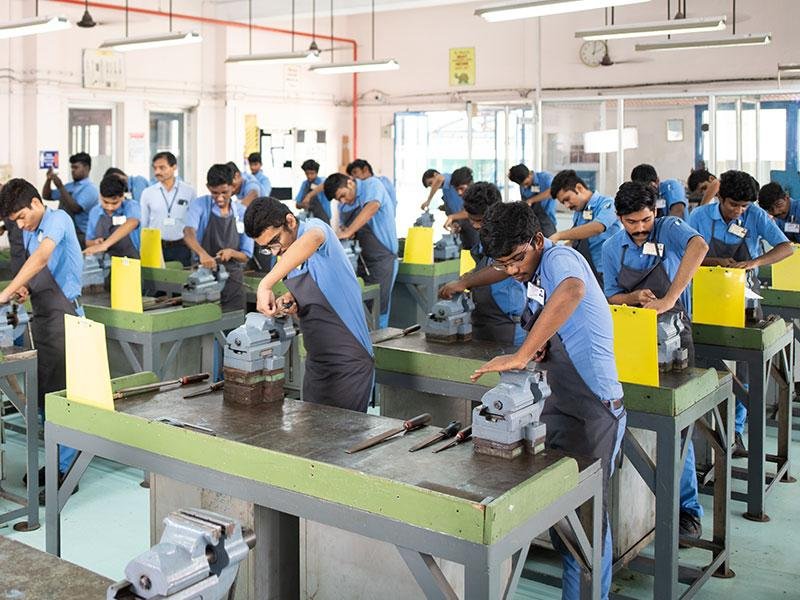
Not every student wants to follow the traditional college-to-job route. Apprenticeships offer another path by combining practical workplace training with learning opportunities. Discover how students can explore apprenticeships, develop professional skills and take their first steps towards employme
Apprenticeships After Class 12: A Career Path More Students Should Know About
What if you could learn a professional skill, work with experienced people and gain real workplace exposure before completing your higher education?
For many students, this is possible through an apprenticeship.
After Class 12, students often feel confused about what to do next. Some choose college, others prepare for competitive exams, while many start searching for jobs. But there is another option worth exploring: learning through practical work experience.
An apprenticeship allows candidates to receive structured training while working with an organisation. Instead of learning everything through books, students get an opportunity to understand how a particular industry operates.
Let's understand how it works and why it can be useful.
- What Exactly Is an Apprenticeship?
An apprenticeship is a training arrangement where a candidate learns a trade, skill or professional role under an employer.
It generally combines:
- Practical, on-the-job training
- Guidance from experienced professionals
- Industry-related learning
- Exposure to real workplace responsibilities
- A stipend, where provided under the apprenticeship arrangement
Unlike a regular classroom course, apprenticeships allow candidates to understand how their knowledge is applied in real situations.
The National Skill Development Corporation (NSDC) explains that apprenticeship training combines theoretical learning with practical workplace experience.
National Skill Development Corporation (NSDC)
- Which Apprenticeship Fields Can Students Explore?
Apprenticeships are not limited to engineering or technical jobs. Opportunities can be available across different industries.
Some examples include:
Information Technology: Computer operations, programming assistance, networking and technical support.
Banking and Finance: Banking operations, office administration and financial services support.
Retail and Sales: Customer service, store operations, sales assistance and inventory management.
Healthcare: Hospital support services, laboratory-related training and healthcare assistance, depending on eligibility.
Manufacturing: Machine operations, electrical maintenance, quality assurance and production.
Hospitality: Food production, front-office operations, housekeeping and customer service.
Media and Design: Multimedia, web page design and other creative or technical roles.
The right opportunity depends on the candidate's educational qualification, age, skills and the employer's requirements.
- Can Students Apply After Class 12?
Yes, certain apprenticeship opportunities may be available to candidates who have completed Class 12, while others require ITI, diploma, graduation or specific technical qualifications.
Before applying, students should carefully check:
- Minimum educational qualification
- Age requirements
- Required technical knowledge
- Training duration
- Location and working hours
- Stipend and other terms
- Whether the opportunity is officially registered
Don't assume every apprenticeship has the same eligibility criteria.
- How Much Can Students Earn?
One of the biggest advantages of an apprenticeship is the possibility of receiving a stipend during training.
However, the amount is not the same for every opportunity. It can depend on the applicable rules, qualification, employer, job role and training arrangement.
Students should read the official offer details before accepting an opportunity.
Remember, the main purpose of an apprenticeship is to gain practical experience and develop skills. The stipend is an added benefit, not a guaranteed high salary.
- How to Find Apprenticeship Opportunities in India
Students don't need to depend entirely on advertisements or social media posts to find training opportunities.
Here are some useful platforms:
- Apprenticeship India: Explore apprenticeship opportunities and register as a candidate.
- Skill India Digital Hub: Discover skill courses, certifications, jobs and apprenticeship-related opportunities.
- National Career Service: Explore career services and employment opportunities.
The government-supported Skill India Digital Hub also provides access to skill courses and career-related opportunities.
web.skillindiadigital.gov.in+1
- Apprenticeship vs Regular College: Which Is Better?
Both options can be valuable, but they serve different purposes.
A regular college education helps students develop academic knowledge and work towards a recognised qualification.
An apprenticeship focuses more on practical training and workplace experience.
For example:
- A student interested in computer science may choose a degree while learning programming through practical projects.
- Someone interested in electrical work may explore relevant technical training and apprenticeship opportunities.
- A student interested in hospitality may look for practical training in hotel operations.
In many cases, education and practical training can complement each other. Students should choose based on their long-term career goals rather than following what everyone else is doing.
- Important Things to Check Before Joining
Not every opportunity advertised as an apprenticeship is genuine or suitable.
Before accepting an offer:
- Verify the employer and organisation.
- Check whether the opportunity is listed on an official platform.
- Understand the training duration and responsibilities.
- Confirm the stipend and payment schedule.
- Read the apprenticeship contract carefully.
- Never share OTPs, passwords or banking PINs.
- Be cautious of recruiters demanding large fees for guaranteed selection.
A genuine opportunity should clearly explain its terms and responsibilities.
- How to Prepare for Your First Apprenticeship
You don't need to know everything before applying. However, a little preparation can improve your confidence.
Start with these steps:
- Identify the industry you are interested in.
- Prepare a simple, updated resume.
- Learn basic computer and communication skills.
- Practise introducing yourself professionally.
- Research the organisation before an interview.
- Apply only to opportunities that match your qualifications.
Even if you don't get selected the first time, use the experience to improve your next application.
Final Thoughts
Choosing a career after Class 12 can feel confusing, especially when there are so many options available.
College, competitive exams and traditional jobs are not the only ways to move forward. Apprenticeships can provide another route for students who want to gain practical experience while developing professional skills.
You don't have to figure out your entire career in one day. Start by exploring your interests, learning something useful and finding opportunities that match your goals.
Your first step into the professional world doesn't always have to be a full-time job. Sometimes, it can begin with learning while doing.
 Career Guidance
 Career Guidance